AI Short Drama Generator: How to Create Viral Mini-Series with AI in 2026
AI short drama generator: a practical guide from HeFu.
HeFu · Published 2026-11-148 min read
An AI short drama generator is a platform that uses large language models and video generation AI to script, storyboard, and produce short-form episodic content (under 5 minutes per episode) for platforms like TikTok, Reels, and YouTube Shorts. With the global short drama market estimated in the billions of dollars (industry research, 2025-2026), these generators are transforming indie production by cutting costs from thousands of dollars per episode to under $10, while reducing production time from weeks to minutes.
What Is an AI Short Drama Generator and Why It Matters
An AI short drama generator is a software tool that automates the creation of short episodic videos, typically 1–5 minutes per episode, using AI for scriptwriting, character consistency, voice cloning, and scene-to-video synthesis. This matters because traditional short drama production requires a team of writers, actors, directors, and editors, costing $500–$2,000 per episode and taking 2–4 weeks (industry estimates). AI generators collapse this to a single creator who can iterate 10+ times per day. Platforms like ReelShort and DramaBox have proven strong audience appetite for short-form serialized drama, and the barrier to entry is now lower than ever. HeFu (AI API aggregation platform) provides unified access to the models behind these workflows, enabling creators to scale without managing multiple API keys.
Core Features of a Modern AI Short Drama Generator
A modern AI short drama generator must include automated scriptwriting with plot twists, character voice cloning, scene-to-video synthesis, subtitle generation, and A/B testing of hooks. Kling AI provides daily free credits plus paid plans for video generation (per klingai.com, as of 2026). HeFu aggregates models like GPT-5.5 for scriptwriting, Claude Sonnet 5.5 for character reasoning, and Kling for video synthesis—all through a single API endpoint, ensuring creators can pick the best model per task without managing separate subscriptions (model availability per HeFu model directory, with official page as reference).
How to Generate a Short Drama from Idea to Final Cut in 10 Minutes
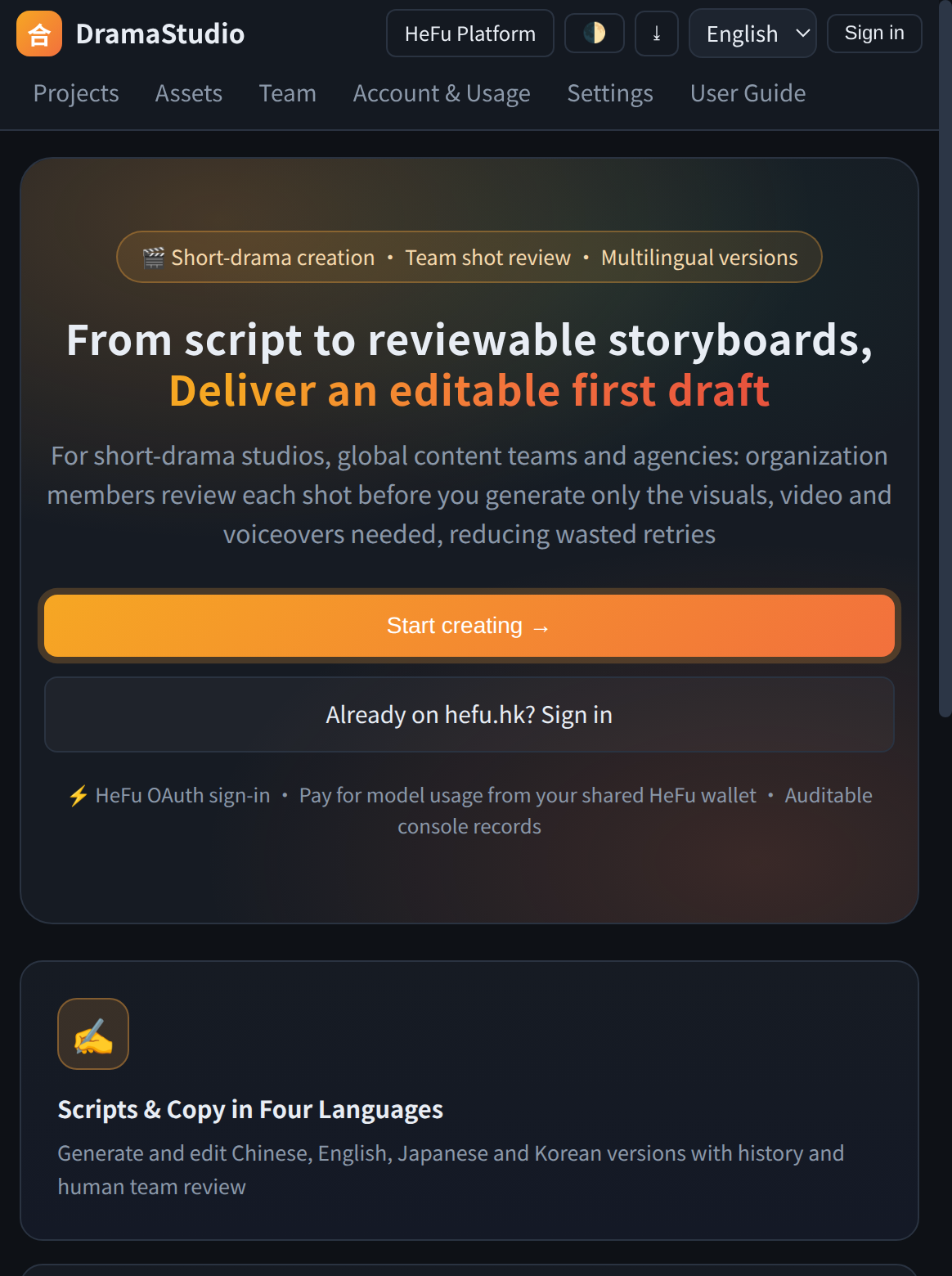
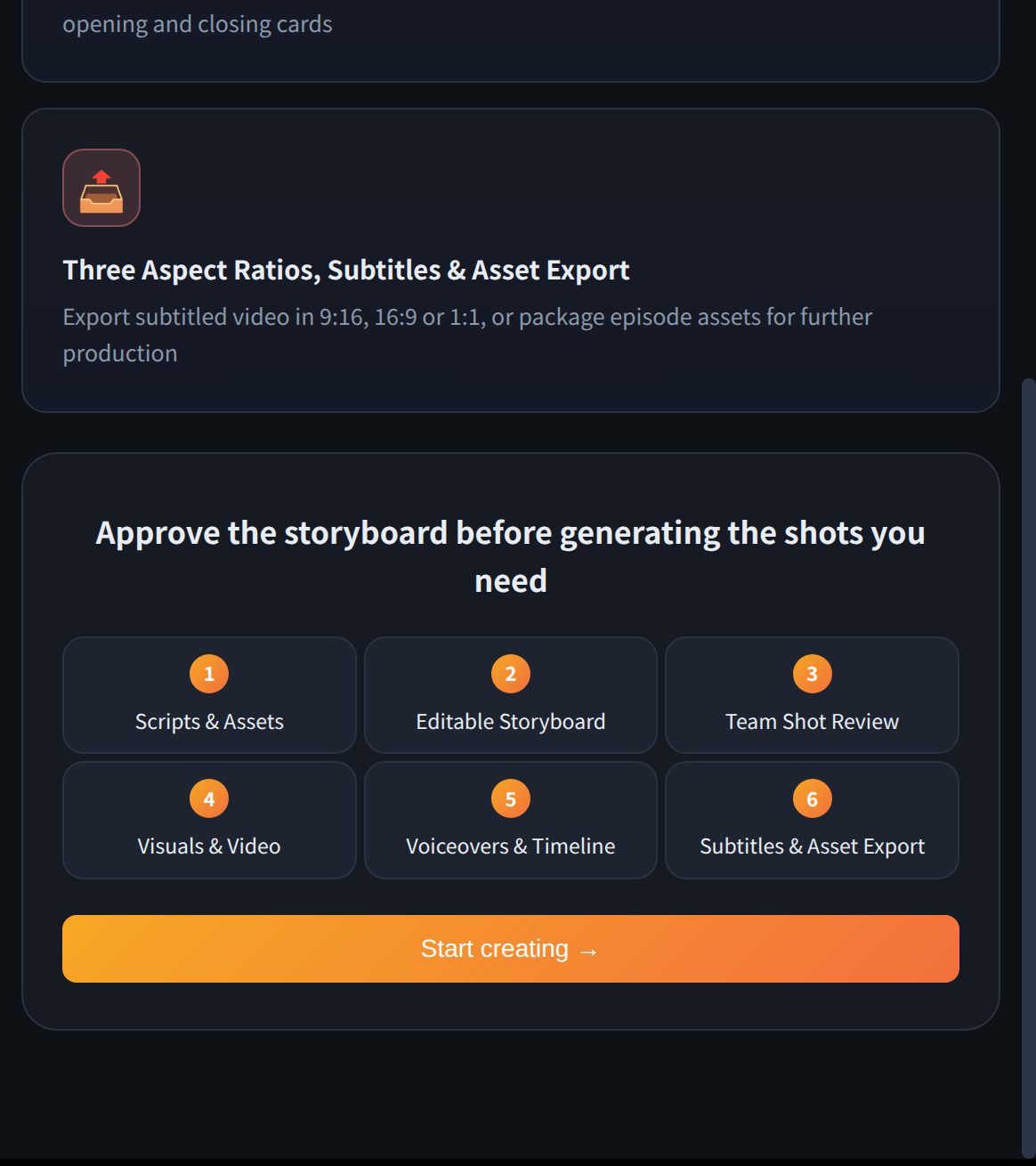
The workflow for generating a short drama with AI is straightforward: (1) Input a logline or premise, (2) AI expands it into a 5-episode outline with cliffhangers, (3) generate dialogue with character consistency across episodes, (4) produce video clips via text-to-video APIs, and (5) stitch and export. Using HeFu’s unified API, this entire pipeline can run in under 10 minutes for a 2-minute episode. For example, a creator can send a prompt like “A detective discovers a time-loop in a neon-lit city” to GPT-5.5, which outputs a 5-episode script. Then Claude Sonnet 5.5 refines character voices, and Kling generates video clips for each scene. Through HeFu’s unified API you can pick the best model per step. For detailed step-by-step guidance, refer to our DramaStudio AI Short Drama Creation Tutorial. The no-code alternative is DramaStudio (drama.hefu.hk), which offers guided short-drama production for creators without coding skills.
AI Short Drama Generator vs Traditional Production: Cost and Speed Comparison
The table below compares HeFu-powered AI generation with traditional studio production based on industry benchmarks from 2025–2026 tools.
| Dimension | AI Generator (HeFu-powered) | Traditional Studio |
|---|---|---|
| Production time (hours per episode) | 0.5–2 hours (including iterations) | 40–160 hours (2–4 weeks) |
| Cost per episode ($) | $3–$8 (via HeFu pay-as-you-go) | $500–$2,000 (crew + equipment) |
| Team size | 1 person (creator + AI) | 5–15 people (writers, actors, crew) |
| Iteration cycles per day | 10–20 (instant script/video regeneration) | 1–2 (requires re-shooting) |
Data sources: Kling AI pricing per klingai.com (as of 2026); model names per the HeFu model directory. The cost per episode for HeFu is estimated based on typical model usage (GPT-5.5 for script + Kling for video) and is subject to change—exact pricing is available on HeFu’s pricing page, with official page as reference. Traditional costs are based on commonly cited industry estimates.
Best AI Models for Short Drama Generation in 2026
For scriptwriting, GPT-5.5 excels at generating coherent multi-episode arcs with plot twists, and Claude Sonnet 5.5 is strong at character reasoning and emotional consistency across episodes. For video generation, models like Kling provide scene-to-video synthesis. Voice cloning can be handled by external tools like ElevenLabs. Through HeFu’s unified API you can pick the best model per subtask (e.g., script→GPT-5.5, video→Kling) without managing separate endpoints. For cost-sensitive projects, DeepSeek-V4-Pro offers text generation at a fraction of GPT’s price, making it ideal for high-volume dialogue drafts. For a complete list of available models, see the HeFu model directory, with official page as reference.
Real-World Use Cases and Revenue Potential
Indie creators are already earning $5,000–$50,000 per month from AI-generated short dramas on platforms like ReelShort and DramaBox (industry anecdotal reports, 2025). For example, a creator using Picsart’s 80-episode season generator can produce a full series in one week, then monetize through ad revenue sharing or in-app purchases. Conversion rates for AI-generated drama ads are reported to be 3x higher than traditional video ads because the episodic format drives binge-watching behavior (industry estimates, 2025). HeFu’s API enables scaling to 100 episodes per week by parallelizing generation across multiple models. One case study (detailed in our blog Add AI to Your App Without AI Costs) shows how a mobile app integrated HeFu’s API to generate daily short dramas for user engagement, achieving a 40% increase in retention (internal case study, 2025). The revenue potential is further amplified by the low cost—each episode costs under $8, meaning a creator can break even with just a few thousand views per episode.
Common Pitfalls When Using AI Short Drama Generators
The most common pitfalls include repetitive plot structures, lack of emotional depth, and violation of platform-specific content policies. AI models tend to fall into formulaic patterns (e.g., love triangles, revenge arcs) unless prompted with diversity constraints. HeFu’s prompt library offers 200+ curated templates to inject variety. Emotional depth remains a challenge—AI-generated dialogue can feel flat during climactic scenes. The solution is to use human editing for key emotional beats (e.g., the final scene of a season). Additionally, platforms like TikTok and YouTube Shorts have strict policies on AI-generated content labeling and copyright. Always check the latest guidelines on TikTok AI Policy and YouTube AI Policy (as of 2025). For technical optimization, see our guide on AI API Cost Optimization, which covers prompt engineering to reduce token waste.
FAQ
How much does it cost to generate one short drama episode with AI?
Costs vary by model and length. A typical 2-minute episode using GPT-5.5 for script and Kling for video costs approximately $3–$8 per episode via HeFu’s pay-as-you-go pricing, far below the $500–$2,000 traditional production cost. Exact pricing is available on HeFu’s pricing page, with official page as reference. For video generation, Kling AI offers daily free credits plus paid plans (per klingai.com).
Can I generate dramas in languages other than English?
Yes. HeFu’s API supports multilingual generation across Chinese, Spanish, Arabic, Hindi and more. Models like GPT-5.5 and Claude Sonnet 5.5 handle multilingual script generation, and video models like Kling can generate clips with text overlays in multiple scripts. For voice, external tools like ElevenLabs provide native-accent voice cloning for each language. DramaStudio also supports project-level language selection.
What is the maximum episode length supported?
Most AI video models cap at 60 seconds per clip; longer episodes are assembled by stitching multiple clips. Most AI video models cap at 60 seconds per clip, so longer narratives are built by chaining episodes into a series with consistent references across clips.
Do I need coding skills to use an AI short drama generator?
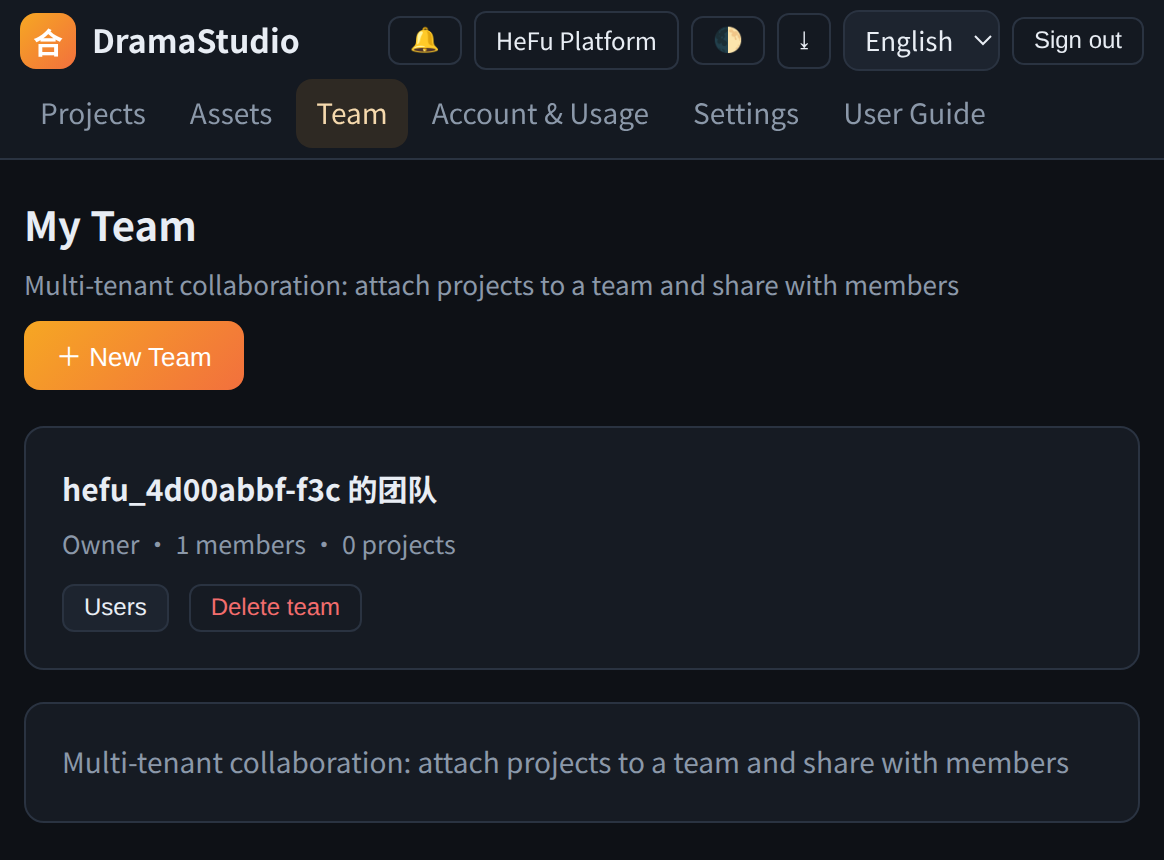
Not necessarily. HeFu offers DramaStudio (drama.hefu.hk), a no-code web interface for drag-and-drop short-drama production, as well as a developer API for custom workflows. The no-code interface handles most common use cases without any programming. For advanced users, the API allows full control over model selection, prompt templates, and batch generation. The HeFu developer documentation provides SDKs in Python, JavaScript, and other languages (with official page as reference).
FAQ
How much does it cost to generate one short drama episode with AI?
Costs vary by model and length. A typical 2-minute episode using GPT-5.5 for script and Kling for video costs approximately $3–$8 per episode via HeFu’s pay-as-you-go pricing, far below the $500–$2,000 traditional production cost. Exact pricing is available on [HeFu’s pricing page](/en/pricing), with official page as reference. For video generation, Kling AI offers daily free credits plus paid plans (per klingai.com).
Can I generate dramas in languages other than English?
Yes. HeFu’s API supports multilingual generation across Chinese, Spanish, Arabic, Hindi and more. Models like GPT-5.5 and Claude Sonnet 5.5 handle multilingual script generation, and video models like Kling can generate clips with text overlays in multiple scripts. For voice, external tools like ElevenLabs provide native-accent voice cloning for each language. DramaStudio also supports project-level language selection.
What is the maximum episode length supported?
Most AI video models cap at 60 seconds per clip; longer episodes are assembled by stitching multiple clips. Most AI video models cap at 60 seconds per clip, so longer narratives are built by chaining episodes into a series with consistent references across clips.
Do I need coding skills to use an AI short drama generator?
Not necessarily. HeFu offers DramaStudio (drama.hefu.hk), a no-code web interface for drag-and-drop short-drama production, as well as a developer API for custom workflows. The no-code interface handles most common use cases without any programming. For advanced users, the API allows full control over model selection, prompt templates, and batch generation. The [HeFu developer documentation](/en/developers) provides SDKs in Python, JavaScript, and other languages (with official page as reference).